Community Trust Eroded by Fear: A Park City Parenting Dilemma
Park City faces a growing culture of fear affecting parenting norms, as community trust erodes over children's play activities.
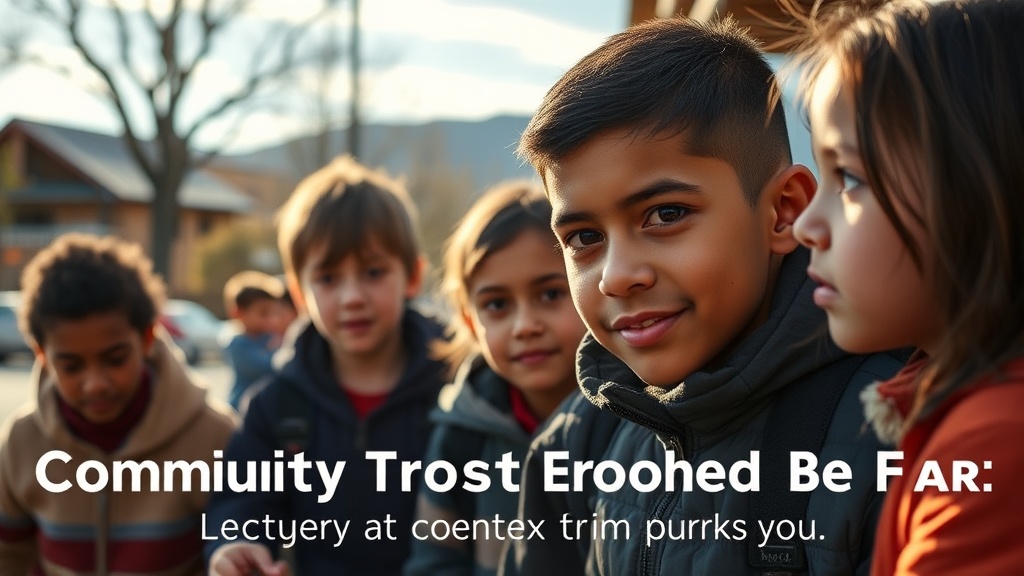
In Park City, Utah, a community once celebrated for its values of independence and outdoor life is now grappling with a growing culture of fear that threatens to reshape parenting norms. Heather Bryant, a resident of Park City for three years and a longtime educator, recently experienced a shocking incident that highlighted these changes. After a neighbor filed a report to Child and Family Services, expressing concerns about her children's play environment, Bryant received a call from a caseworker. The report was based on a casual soccer game happening outside her home. Although the caseworker assured Bryant that her children were safe and thriving, the incident raised larger questions about how fear is increasingly permeating the fabric of community interactions.
Bryant’s story is not an isolated incident; it reflects a broader trend of turning to institutional systems to address what used to be considered ordinary parenting challenges. The complaint against her children’s play, which involved typical childhood rough-and-tumble behavior, was described as 'dysregulated' by the investigator. This shift in perception has significant implications for how parents navigate the complexities of raising children in an environment marked by heightened scrutiny and suspicion.
As an educator and parent, Bryant emphasizes the importance of intentional parenting, where children are allowed to engage in unstructured play while maintaining necessary safety measures. She and her husband, both educators, ensure that their children wear helmets during activities involving wheels, return home before dark, and have adult supervision while playing. Yet, despite their responsible approach, they find themselves facing scrutiny from neighbors and institutions.
This incident is emblematic of a larger cultural shift in parenting that has seen increased fear and caution overshadow traditional values of independence. The rise of 'helicopter parenting,' characterized by constant oversight and a zero-tolerance approach to risk, has been linked to negative outcomes for children, including higher anxiety and lower resilience. Paradoxically, while parents are trying to protect their children from perceived dangers, they may be undermining essential developmental experiences that contribute to resilience and confidence.
The situation becomes more complicated when considering how community dynamics are affected. When a child's natural play is framed as a safety concern serious enough to warrant involvement from social services, it can create an environment of mistrust among neighbors. Instead of viewing each other as supportive community members, residents may begin to see one another as potential liabilities. This erosion of trust can have lasting effects on community cohesion and the shared values that have defined Park City for generations.
Bryant recalls attending an event featuring Olympic skier Ted Ligety, who shared his own childhood experiences of unsupervised play on the mountain. Ligety's story serves as a reminder of how unstructured, self-directed outdoor play can foster not only a love for sports but also an ability to take risks and learn from failures. In contrast, the increasing tendency to involve formal systems in ordinary parenting decisions threatens to stifle that spirit of adventure and independence that has long been a hallmark of life in Park City.
The implications of this cultural shift extend beyond individual families. If Park City aims to continue producing confident, capable young people—whether they aspire to be Olympic athletes or simply resilient adults—the community must reflect on the kind of childhood experiences they are fostering. Questions about safety and well-being are valid, but they must be balanced with a recognition of the developmental needs of children.
As Bryant poignantly concludes, the real challenge facing Park City is not whether residents care about children's safety, but whether fear will dictate the way they live together and the opportunities available for their children. The community must navigate a path that allows for age-appropriate freedom and trust, rather than one that constrains childhood experiences under the weight of anxiety. In doing so, they can reclaim the spirit of independence that has defined their community for years and ensure that the next generation has the chance to grow into capable, resilient individuals.
In light of these developments, Park City’s residents are called to foster a culture that embraces trust and open dialogue, rather than one governed by fear and suspicion. Only then can families truly thrive amidst the challenges of parenting in today’s world.