Carded for Nonalcoholic Beverages: A Surprising Checkout Experience
A shopper at Brickyard Harmon’s in Utah was carded for buying nonalcoholic sparkling wine, raising questions about retail age verification practices.
As the holiday season approaches, shoppers are often met with festive displays and special promotions, particularly for New Year’s Eve celebrations. This year, one customer experienced an unexpected twist during a routine grocery shopping trip at Brickyard Harmon’s in Salt Lake City, Utah. The incident raises questions about age verification practices in retail settings, especially concerning nonalcoholic products.
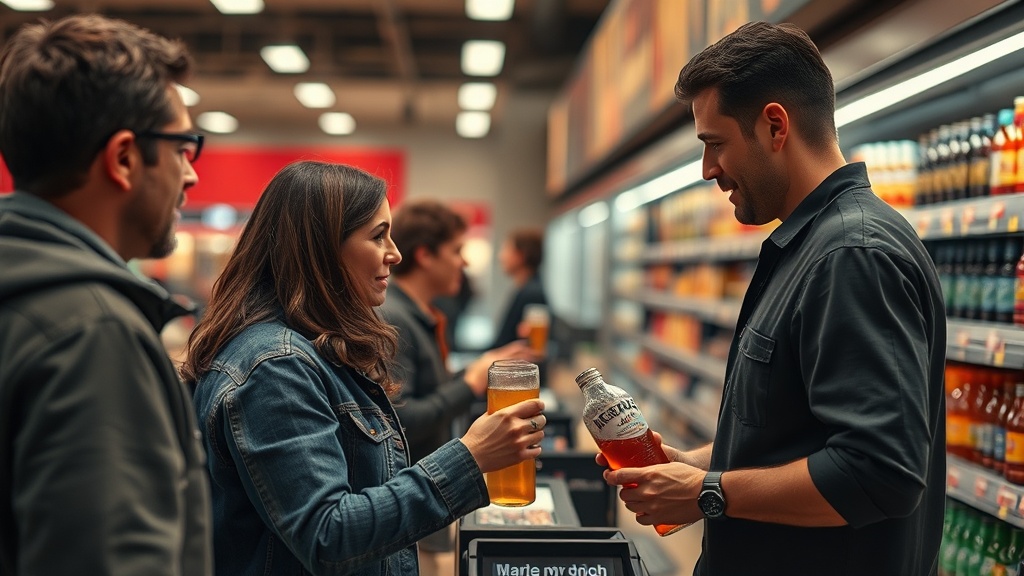
While shopping for New Year’s Eve supplies, a local resident, who wishes to remain anonymous, encountered a promotional booth for "Zilch," a nonalcoholic sparkling wine. Attracted by the vibrant display and the offer of free samples, she decided to try the beverage and ultimately purchased a bottle to complement her holiday festivities. However, when she arrived at the checkout stand, she was met with an unusual request from the cashier.
As the cashier scanned the bottle, she informed the shopper that she needed to see her driver’s license. The shopper was taken aback, questioning the necessity of presenting identification for a nonalcoholic product. "Isn’t 'Zilch' a strong enough clue that this is not an alcoholic beverage?" she remarked, reflecting on the irony of being carded for a drink that contains no alcohol.
The cashier explained that her system indicated a need to scan the shopper’s driver’s license, a standard procedure that some retailers have adopted to ensure compliance with state regulations. The shopper speculated that this could be a glitch in the system, a possibility that has been discussed among patrons who frequent various local establishments.
Age verification policies are not uncommon in retail environments, particularly those involving alcoholic beverages. However, the application of these policies to nonalcoholic products is relatively rare. According to the Utah Department of Alcoholic Beverage Control, the state has stringent laws regarding the sale of alcohol, and businesses are often cautious in their compliance efforts. This caution has led some retailers to implement broad age verification processes, even when it comes to products that contain no alcohol.
This incident has sparked discussions among consumers and experts about the implications of such practices. Many shoppers express concerns that being carded for nonalcoholic items could lead to confusion and frustration. In a world where convenience and efficiency are paramount, unnecessary checks at the checkout could detract from the shopping experience, especially during busy holiday seasons.
Retailers, on the other hand, argue that age verification is a necessary measure to avoid legal repercussions. They contend that thorough identification checks help to maintain compliance with state regulations and protect the integrity of their businesses. However, the question remains: how far should these practices extend? Are they truly necessary for nonalcoholic products, or have they become an overreach?
Experts in retail management suggest that while age verification can be important for certain products, it may be time for businesses to reevaluate their policies regarding nonalcoholic beverages. "Consumers appreciate transparency and efficiency in their shopping experience. Carding for nonalcoholic items may not only confuse customers but could also lead to a decline in sales for those products," stated Dr. Emily Hargrove, a retail behavior researcher.
As consumers adapt to evolving shopping experiences, incidents like the one at Brickyard Harmon’s serve as a reminder of the complexities involved in retail practices. For many, the holiday season is a time of joy and celebration, yet unexpected hurdles can disrupt the festive spirit. In a state known for its unique relationship with alcohol laws, this incident underscores the delicate balance between compliance and customer satisfaction.
Whether this particular case was an isolated incident or indicative of a broader trend remains to be seen. As more people share their shopping experiences, it could lead to a reassessment of how retailers approach age verification, particularly for products designed for everyone to enjoy.
In conclusion, while the shopper at Brickyard Harmon’s may have encountered an unusual situation, it opens up a larger dialogue about the necessity and implementation of age verification measures in retail. As the retail landscape continues to evolve, businesses must consider how their practices align with customer expectations and the legal frameworks within which they operate. For now, the shopper’s experience serves as a reminder that even nonalcoholic celebrations can come with unexpected twists, especially during the bustling holiday season.