BYU Football's Next Defensive Coordinator: A Look at Potential Candidates
As BYU football seeks a new defensive coordinator, a familiar candidate emerges, promising continuity and familiarity for the team.
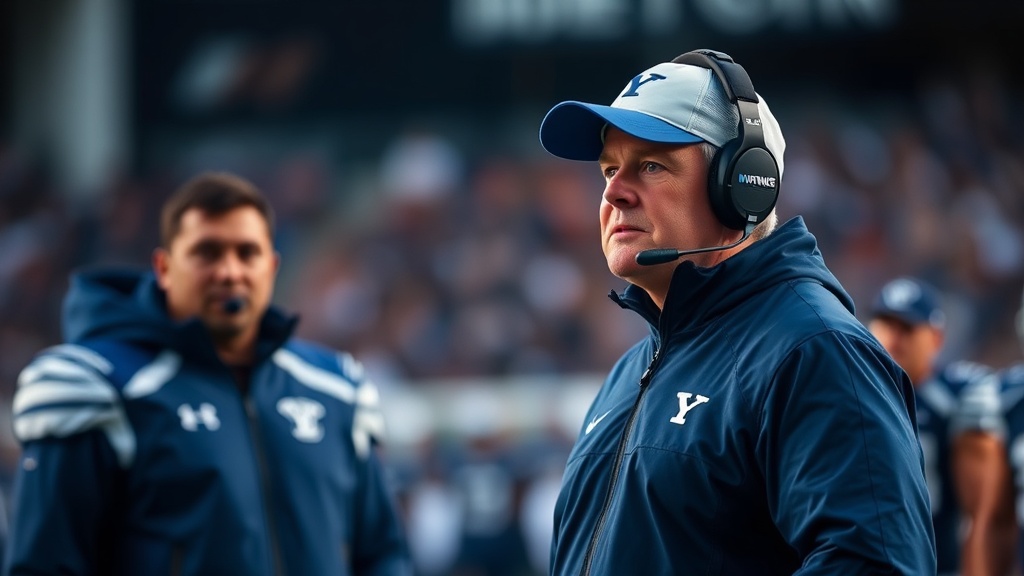
In the wake of Jay Hill’s departure from BYU football, the search for a new defensive coordinator has become a focal point for the program. Hill, who has established himself as a formidable leader in defensive strategies during his tenure, has left behind a legacy that not only shaped the team’s performance but also created a significant void in the coaching staff. One of the most compelling candidates to fill this role is none other than the individual who played a pivotal role in shaping Hill’s coaching philosophy: the man who once mentored him.
As the current defensive backs coach at BYU, this candidate stands out as an exceptional choice. His deep understanding of the program, combined with the knowledge he gained from working alongside Hill, positions him uniquely to carry on the defensive strategies that have proven successful over the years. The potential transition would not only serve to maintain continuity within the team but also ensure that the existing players are already familiar with the coaching style and expectations.
The dynamics within the BYU football program have been largely influenced by Hill’s approach to defense, which emphasized a blend of aggressive play and strategic planning. His departure raises questions about how the team will adapt moving forward, particularly with the upcoming season on the horizon. The need for a candidate who can seamlessly integrate into this framework is critical. The coach currently in question has been instrumental in developing the defensive backs, focusing on both skill development and mental toughness, attributes that have become synonymous with the BYU defense.
In discussions about potential candidates, it is essential to consider not just their qualifications but also their relationship with the existing players. The new coordinator will need to inspire confidence and trust, particularly in a team still reeling from the changes at the top. This candidate has already built rapport with the players, a factor that could ease the transition and help maintain morale as the team navigates this change.
Moreover, BYU football has a strong tradition of promoting from within, which adds another layer of significance to this potential hire. The program has a history of valuing continuity, and bringing in a familiar face could help uphold the team’s culture and values. This is especially relevant given the challenges of recruiting in an increasingly competitive landscape. Prospective players often look for stability and a clear vision when choosing a program, and a well-regarded internal promotion could send a strong message about the direction of BYU football.
The decision to promote this candidate would not only reflect a commitment to continuity but also demonstrate a willingness to invest in the development of existing coaching talent. Many in the BYU community have expressed support for this direction, citing the candidate’s deep understanding of the program’s ethos, which is rooted in hard work, discipline, and a commitment to excellence. This support underscores the belief that the best choice may already be within the walls of the BYU football facilities.
As the administration conducts its search, it will also need to consider the evolving landscape of college football, where defensive schemes are constantly changing. The new coordinator will need to adapt to these changes while also staying true to the foundational principles that have defined BYU’s defense. The candidate in consideration has already demonstrated a capacity for innovation, blending traditional strategies with modern techniques that resonate with today’s game.
In conclusion, the journey to find a successor to Jay Hill as defensive coordinator at BYU is not merely about filling a vacancy; it’s about ensuring that the program continues to thrive under a leadership model that has proven effective. The candidate who is currently in a position to step up embodies a wealth of experience, a strong connection to the existing team, and a comprehensive understanding of what it takes to succeed at BYU. As the search unfolds, the university community will be watching closely, eager to see how this pivotal decision shapes the future of BYU football. With the right choice, the program can look forward to a new chapter that honors its past while ambitiously pursuing its future goals.